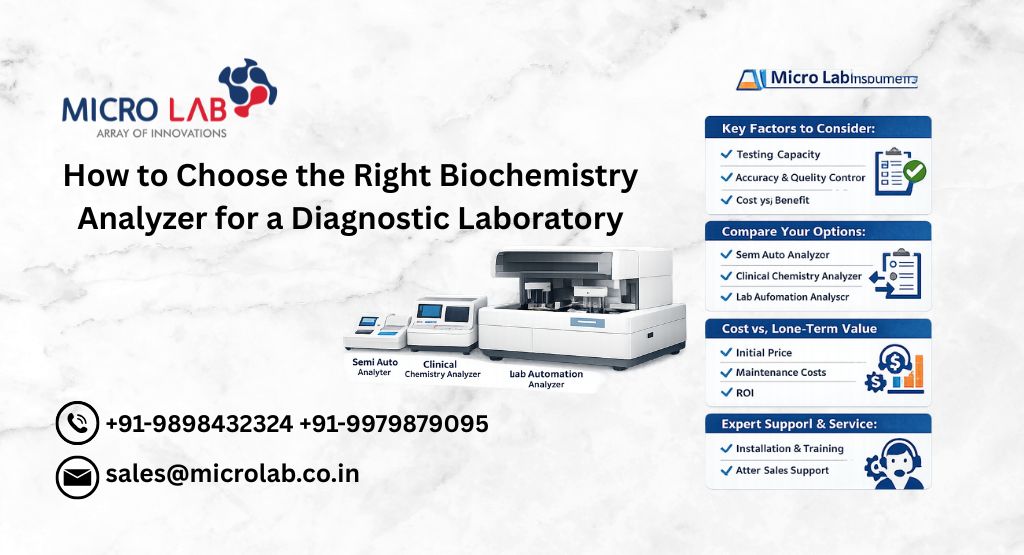
How to Choose the Right Biochemistry Analyzer for a Diagnostic Laboratory
Modern diagnostic laboratories depend on accurate, fast, and reliable testing equipment. One of the most critical instruments is a biochemistry analyzer for diagnostic laboratory testing, which helps detect diseases by analyzing blood, urine, and other body fluids.
However, with many options available—from semi auto biochemistry analyzers to fully automated lab automation analyzers—choosing the right system can be confusing. The right analyzer improves lab efficiency, reduces errors, and increases diagnostic accuracy.
In this guide, we’ll explain how to select the best analyzer for your lab, key features to compare, pricing considerations, and how Micro Lab Instruments can help diagnostic centers make the right investment.
What is a Biochemistry Analyzer for Diagnostic Laboratory Use?
A biochemistry analyzer for diagnostic laboratory testing is a medical laboratory device used to measure chemical components in biological samples such as blood serum, plasma, or urine.
These analyzers help diagnose and monitor conditions such as:
- Diabetes
- Liver disease
- Kidney disorders
- Heart disease
- Metabolic conditions
Typical parameters tested include:
- Glucose
- Cholesterol
- Urea
- Creatinine
- Electrolytes
- Enzymes
Modern analyzers automate these tests, enabling labs to process hundreds of samples per hour with high accuracy.
Why Choosing the Right Analyzer Matters for Diagnostic Labs
Selecting the correct analyzer directly impacts lab ivity, operational costs, and patient outcomes.
A well-selected system can help your laboratory:
- Improve test accuracy and reliability
- Reduce manual errors
- Increase sample processing speed
- Lower long-term operational costs
- Expand testing capabilities
For growing diagnostic labs, choosing the wrong analyzer can result in higher maintenance costs, slower turnaround times, and limited test capacity.
Types of Biochemistry Analyzers Available
1. Semi Auto Biochemistry Analyzer
A semi auto biochemistry analyzer requires some manual intervention, such as pipetting samples or reagents.
Best for:
- Small diagnostic labs
- Clinics and pathology centers
- Labs with lower sample volume
Advantages
- Lower investment cost
- Easy operation
- Compact design
Limitations
- Lower throughput
- Requires trained technician handling
2. Fully Automated Clinical Chemistry Analyzer
A clinical chemistry analyzer performs most steps automatically, including sample handling, reagent mixing, and measurement.
Best for:
- Medium to large diagnostic laboratories
- Hospitals with high patient volume
Benefits
- High testing speed
- Reduced human error
- Improved efficiency
3. Advanced Lab Automation Analyzer
A lab automation analyzer integrates multiple lab processes and can connect with Laboratory Information Systems (LIS).
Ideal for
- Large diagnostic centers
- Multi-location pathology labs
Key advantages
- Continuous sample processing
- Minimal manual intervention
- Integration with digital reporting systems
Key Factors to Consider Before Buying a Biochemistry Analyzer
1. Testing Capacity and Throughput
Your analyzer should match the daily sample load of your laboratory.
Example:
- Small labs: 40–80 tests/hour
- Medium labs: 120–300 tests/hour
- Large labs: 400+ tests/hour
Choosing a system with the right throughput prevents delays and ensures faster reporting.
2. Accuracy and Quality Control
Diagnostic results must be precise and reproducible.
Look for analyzers that include:
- Automatic calibration
- Built-in quality control programs
- Error detection alerts
Reliable analyzers reduce diagnostic errors and improve patient trust.
3. Clinical Chemistry Analyzer Price vs Long-Term Value
Many laboratories compare only the clinical chemistry analyzer price, but the real cost includes:
- Reagent consumption
- Maintenance costs
- Calibration requirements
- Software upgrades
Example comparison
| Factor | Low-cost Analyzer | High-quality Analyzer |
|---|---|---|
| Initial Cost | Low | Medium |
| Maintenance | High | Low |
| Accuracy | Moderate | High |
| Long-Term ROI | Low | High |
Investing in a reliable analyzer often provides better long-term returns.
4. Ease of Use and Automation
Modern labs prefer analyzers with:
- Touchscreen interfaces
- Automated calibration
- Auto-sample loading
- LIS connectivity
Automation reduces technician workload and improves efficiency.
5. After-Sales Support and Service
One of the most overlooked factors is technical support.
Choose manufacturers who provide:
- Fast service support
- Training for lab technicians
- Spare parts availability
- Warranty and maintenance plans
Reliable support ensures minimal downtime in diagnostic operations.
Real Experience Insight from Diagnostic Laboratories
Many diagnostic labs initially start with a semi auto biochemistry analyzer due to budget constraints.
However, as patient volume grows, labs often upgrade to automated clinical chemistry analyzers to handle higher workloads and reduce manual effort.
This upgrade significantly improves:
- Test turnaround time
- Sample handling efficiency
- Revenue potential for laboratories
Why Diagnostic Labs Choose Micro Lab Instruments
Micro Lab Instruments is known for delivering high-performance laboratory analyzers designed for diagnostic accuracy and operational efficiency.
Key reasons laboratories trust the brand:
✔ Advanced technology for reliable testing
✔ Durable and precision-built analyzers
✔ Cost-effective solutions for labs of all sizes
✔ Expert installation and training support
✔ Responsive after-sales service
Whether you need a semi auto biochemistry analyzer or a fully automated lab automation analyzer, Micro Lab Instruments provides solutions tailored for modern diagnostic laboratories.
Cost vs Benefit: Is Investing in a High-Quality Analyzer Worth It?
Short answer: Yes.
A better analyzer improves:
- Faster test processing
- Higher diagnostic accuracy
- Lower error rates
- Increased patient trust
- Better lab reputation
Over time, the increased test capacity and reliability can significantly boost laboratory revenue.
FAQs
What is the best biochemistry analyzer for a diagnostic laboratory?
The best biochemistry analyzer for diagnostic laboratory use depends on test volume, automation needs, and budget. Small labs often choose semi auto analyzers, while high-volume labs prefer fully automated clinical chemistry analyzers for faster processing and minimal manual work.
What is the difference between semi auto and fully automatic biochemistry analyzers?
A semi auto biochemistry analyzer requires manual sample handling, while a fully automatic analyzer performs sample loading, reagent mixing, and testing automatically. Automated systems offer higher throughput, faster results, and reduced human error.
What factors affect clinical chemistry analyzer price?
The clinical chemistry analyzer price depends on testing capacity, automation level, technology, reagent system, software integration, and brand reputation. Advanced lab automation analyzers generally cost more but offer better long-term efficiency.
How many tests can a biochemistry analyzer perform per hour?
Depending on the model, analyzers can process 40 to 800 tests per hour. Small labs usually require lower throughput, while large diagnostic centers need high-capacity automated systems.
Why is automation important in diagnostic laboratories?
Automation improves accuracy, speed, and efficiency in diagnostic laboratories. Automated lab analyzers reduce manual errors, speed up sample processing, and help laboratories manage high testing volumes.
Conclusion
Choosing the right biochemistry analyzer for diagnostic laboratory operations is a crucial decision that directly impacts diagnostic accuracy, lab efficiency, and long-term profitability.
By considering testing capacity, automation level, reliability, and cost-benefit factors, laboratories can invest in the right technology that supports growth and improves patient care.
Get Expert Guidance for Your Laboratory
If you are planning to upgrade or purchase a biochemistry analyzer, the experts at Micro Lab Instruments can help you choose the perfect solution for your diagnostic laboratory.
Contact Micro Lab Instruments today to get a quote or learn more about advanced laboratory analyzers designed for modern diagnostic labs.