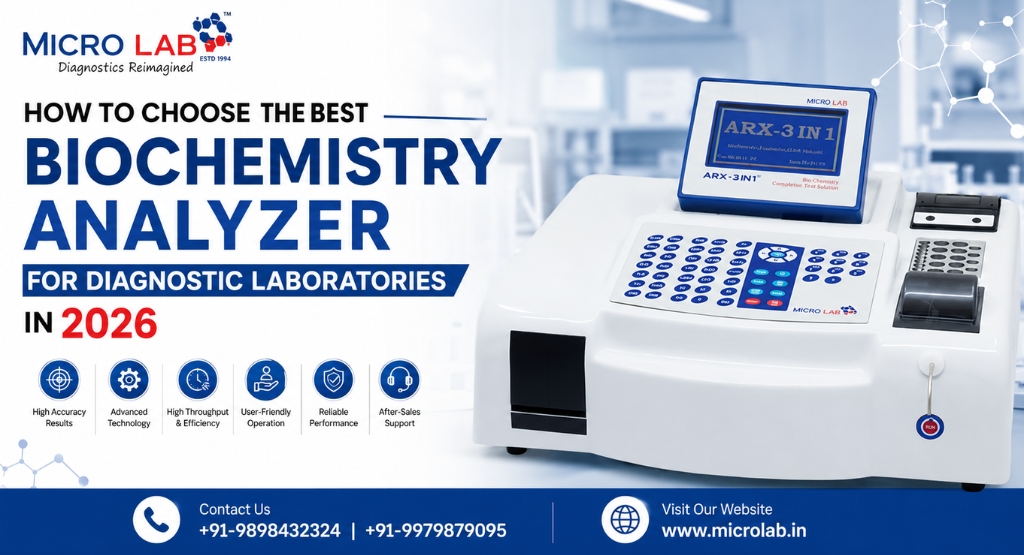
Modern diagnostic laboratories rely heavily on accurate, fast, and efficient testing systems. Among the most essential instruments in any laboratory is a Biochemistry Analyzer, a device that plays a critical role in testing blood, serum, plasma, urine, and other biological samples. As laboratory testing volumes continue to grow and healthcare standards become more demanding, selecting the right analyzer has become increasingly important.
In 2026, laboratories are looking beyond basic testing capabilities. They require automation, connectivity, precision, scalability, and long-term reliability. Whether you are setting up a new laboratory, upgrading existing infrastructure, or expanding testing capacity, choosing the right Biochemistry Analyzer can significantly impact diagnostic accuracy, workflow efficiency, and operational costs.
This guide explains the key factors diagnostic laboratories should consider before investing in a new analyzer.
What Is a Biochemistry Analyzer?
A Biochemistry Analyzer is an advanced laboratory instrument used to perform biochemical tests on patient samples. These tests help healthcare professionals evaluate organ function, diagnose diseases, monitor treatments, and assess overall health.
Common parameters analyzed include:
- Liver function tests
- Kidney function tests
- Blood glucose levels
- Lipid profiles
- Electrolytes
- Enzymes
- Proteins
- Hormones
Modern systems often integrate with Clinical Chemistry Analyzer platforms and laboratory information systems (LIS) to streamline operations and improve reporting accuracy.
Why Is Choosing the Right Biochemistry Analyzer Important?
The quality of laboratory results directly influences medical decisions. An analyzer with poor precision, frequent downtime, or limited functionality can affect laboratory ivity and patient care.
A well-selected analyzer offers:
- Consistent and accurate results
- Faster turnaround time
- Reduced manual intervention
- Improved workflow efficiency
- Lower operational costs
- Better compliance with laboratory standards
For growing diagnostic centers, investing in the right Pathology Lab Equipment is not just a technical decision—it is a strategic business investment.
What Factors Should You Consider Before Buying a Biochemistry Analyzer?
1. Laboratory Testing Volume
Small Laboratories: Labs processing fewer than 100 samples per day may benefit from semi-automatic systems.
Medium Laboratories: Facilities handling 100–500 samples daily often require fully automated analyzers with moderate throughput.
High-Volume Diagnostic Centers: Large laboratories processing thousands of samples each day need high-speed automated analyzers capable of continuous operation.
Choosing an analyzer that matches your testing volume helps prevent bottlenecks while optimizing costs.
2. Accuracy and Precision
Diagnostic decisions depend on reliable data.
Look for analyzers that provide:
- High reproducibility
- Minimal calibration drift
- Advanced quality control functions
- Stable reagent management
Consistent performance reduces repeat testing and improves confidence in laboratory results.
3. Automation Capabilities
Automation has become a major requirement in modern pathology laboratories.
Advanced analyzers offer:
- Automatic sample loading
- Barcode scanning
- Automatic reagent management
- Auto-calibration
- Auto-quality control
- Automatic result validation
Automation minimizes human error while improving efficiency and ivity.
4. Throughput Speed
Throughput refers to the number of tests performed per hour.
Laboratories should select throughput based on current and future testing demands.
Typical categories include:
| Laboratory Type | Recommended Throughput |
|---|---|
| Small Labs | 100–200 tests/hour |
| Mid-Size Labs | 300–600 tests/hour |
| Large Diagnostic Centers | 800+ tests/hour |
Selecting the right throughput ensures smooth operations during peak testing periods.
5. Integration with Electrolyte Analysis
Many laboratories require both biochemical and electrolyte testing.
Choosing a Clinical Chemistry Analyzer with integrated Electrolyte Analyzer functionality can offer several advantages:
- Reduced equipment footprint
- Faster reporting
- Lower maintenance requirements
- Simplified workflow management
Integrated systems are becoming increasingly popular in diagnostic laboratories aiming for higher operational efficiency.
How Important Is Software and Connectivity?
Modern laboratories are data-driven environments.
The best analyzers in 2026 support:
- Laboratory Information System (LIS) integration
- Hospital Information System (HIS) connectivity
- Cloud-based data management
- Remote diagnostics
- Real-time monitoring
Advanced software capabilities help laboratories improve reporting accuracy, compliance, and workflow transparency.
What Role Does Reagent Management Play?
Reagent consumption significantly affects laboratory operating costs.
Evaluate:
- Reagent stability
- Open-vial life
- Onboard refrigeration
- Reagent inventory tracking
- Cost per test
Efficient reagent management reduces wastage and improves profitability.
Why Should Laboratories Consider Scalability?
Diagnostic laboratories often experience growth in sample volume over time.
An analyzer that supports future expansion provides:
- Additional testing parameters
- Modular upgrades
- Expanded throughput capacity
- New assay integration
Scalable systems protect your investment and reduce future replacement costs.
How Do Maintenance and Service Support Affect Performance?
Even the most advanced analyzer requires ongoing maintenance.
Before purchasing, evaluate:
Service Availability: Ensure technical support is available in your region.
Spare Parts Availability: Fast access to replacement components reduces downtime.
Training Programs: Comprehensive operator training improves performance and reduces operational errors.
Preventive Maintenance: Regular maintenance schedules help maximize instrument lifespan.
Common Mistakes to Avoid When Buying a Biochemistry Analyzer
Many laboratories focus solely on purchase price and overlook long-term operational factors.
Avoid these common mistakes:
Choosing Based Only on Initial Cost: A low-cost analyzer may have higher reagent and maintenance expenses.
Ignoring Future Growth: Underestimating testing volume can lead to costly upgrades later.
Overlooking Connectivity: Poor software integration can create workflow inefficiencies.
Neglecting Service Support: Limited technical assistance can result in prolonged downtime.
Why Micro Lab Instruments Is a Trusted Choice for Diagnostic Laboratories
When selecting a Biochemistry Analyzer, laboratories need a partner that understands both clinical requirements and operational challenges.
Micro Lab Instruments provides advanced laboratory solutions designed to deliver:
- High analytical accuracy
- Reliable performance
- User-friendly operation
- Automated workflow support
- Comprehensive technical assistance
- Customizable laboratory solutions
- Competitive operating costs
With a strong focus on quality, innovation, and customer support, Micro Lab Instruments helps diagnostic laboratories improve efficiency while maintaining the highest testing standards.
Best Practices for Selecting the Right Biochemistry Analyzer in 2026
Before finalizing your purchase:
- Assess current and future sample volumes.
- Define required test parameters.
- Evaluate automation capabilities.
- Compare throughput performance.
- Check software integration options.
- Analyze reagent costs.
- Review service support availability.
- Consider scalability requirements.
- Verify quality control functions.
- Request a live demonstration whenever possible.
Following these steps ensures a more informed and cost-effective investment decision.
Conclusion
Choosing the best Biochemistry Analyzer for a diagnostic laboratory in 2026 requires careful evaluation of accuracy, automation, throughput, connectivity, reagent management, scalability, and service support. The right analyzer not only improves diagnostic reliability but also enhances laboratory ivity and long-term profitability.
As healthcare demands continue to evolve, laboratories that invest in advanced Clinical Chemistry Analyzer systems, integrated Electrolyte Analyzer solutions, and reliable Pathology Lab Equipment will be better positioned to deliver fast, accurate, and efficient diagnostic services.
Partnering with an experienced provider like Micro Lab Instruments ensures access to high-quality laboratory solutions tailored to modern diagnostic needs.
Looking for the Right Biochemistry Analyzer for Your Laboratory?
Micro Lab Instruments offers advanced, reliable, and scalable laboratory solutions designed to meet the evolving needs of modern diagnostic centers. Whether you need a standalone Biochemistry Analyzer, integrated Clinical Chemistry Analyzer, or complete Pathology Lab Equipment setup, our experts can help you choose the ideal solution.
Contact Micro Lab Instruments today to request a quote, schedule a demonstration, or get expert guidance for your laboratory requirements.
Read More: Top Biochemistry Analyzer Manufacturer in India, Semi Auto vs Fully Automated Biochemistry Analyzer